Why the Toronto Pearson gold heist is the crime story worth studying for its paperwork, not its guns
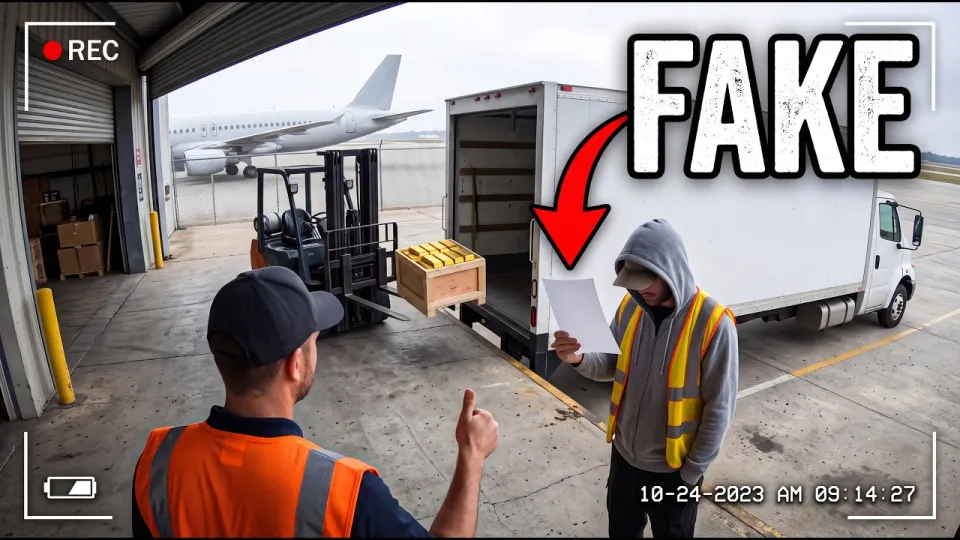
Video: Airport Has No Idea It Just Handed $20M in Gold to Thieves (crime story)
· based on the channel Max Crime
A crime story is most useful when it shows how little violence a major theft actually requires, and the Toronto Pearson gold heist proves the point: thieves walked out with roughly $20 million in gold by presenting a fake pickup slip for a shipment of fish. The caper is a study in procedural gaps rather than armed robbery, which is exactly why it holds up as a case worth dissecting step by step.
What happened at Toronto Pearson in the Air Canada cargo case
The core of the incident fits in a few sentences. In April 2023, an Air Canada flight arrived at Toronto Pearson International Airport carrying 6,600 bars of gold inside a single metal container. Later that same evening, a man backed a white truck up to the airline's cargo warehouse and handed staff a fraudulent document claiming to be for a pickup of fish that had already been collected the day before. The shipment left the facility on that truck, and the airport had no idea it had just handed a fortune to thieves.
The consignment was not only gold. Reports around the case put the total value of the stolen cargo at around $20 million, with cash included alongside the bullion. The scale matters because it reframes the crime: this was not a smash-and-grab but a logistics operation executed inside normal business hours against a system designed for speed.
Why the fake fish slip worked better than a weapon
Cargo terminals are built to move freight, not to interrogate every driver, and that design is the vulnerability. The thieves did not need to defeat a vault; they needed to satisfy a clerk. A plausible document, a plausible vehicle, and a plausible reason to be at the loading dock were enough to start the chain of handoffs.
The fish detail is the clever part. By referencing a shipment that had already been collected the day before, the fraudulent paperwork created a story that sounded routine and slightly overdue, the kind of loose end staff expect to see resolved. Nobody had to be threatened, and no alarm had to be defeated, because the request arrived through the front door of the process.
The step-by-step anatomy of the gold theft
The heist reads as a short sequence of ordinary actions that, combined, produced an extraordinary loss.
- A legitimate flight lands at Toronto Pearson with a high-value consignment inside a single metal container.
- The container is moved into the Air Canada cargo warehouse and logged as freight awaiting pickup.
- A man arrives in a white truck and approaches staff with a document for a fish shipment.
- The paperwork references cargo already collected the previous day, making the request look like a correction rather than a new movement.
- Staff release the shipment, and the truck departs with the gold and cash aboard.
- The discrepancy surfaces only later, when the real recipient or the paperwork trail fails to match.
Each step is mundane. That is the lesson: in cargo theft, the weakest link is usually a verification step that has been optimized away.
The procedural gaps that let $20 million in gold leave the airport
The failure was systemic rather than personal, and it maps onto gaps that appear at freight hubs worldwide. Verification of a driver's identity and authority is often paper-based, so a convincing document substitutes for a confirmed chain of custody. High-value shipments can be stored alongside ordinary freight, meaning the same clerk handles bullion and frozen fish with the same level of scrutiny. And pickup records may not be reconciled in real time, so a shipment can be gone for hours before anyone notices it should not have moved.
Security at airports is also split across many hands. Airlines, ground handlers, warehouse operators, and police each own a slice of the process, and a theft succeeds when the seams between them are wide enough for a truck to pass through. The Toronto Pearson case became a reference point precisely because the seams were so visible.
What happened after the theft and why the case stayed in the news
The immediate aftermath was a familiar pattern for high-value cargo crime: an investigation, a public appeal, and a slow trickle of details about how the shipment was released. The case drew attention from insurers, freight forwarders, and law enforcement because the loss was large, the method was simple, and the target was a major international gateway.
For anyone who follows true crime cases, the appeal is the absence of drama. There is no chase, no shootout, and no elaborate disguise, only a document, a truck, and a warehouse that treated an unusual pickup as ordinary business. That is also why the story keeps circulating in true crime documentaries and podcasts: it is a reminder that the biggest losses often come from the smallest procedural shortcuts.
Why this crime story still matters for cargo security in 2026
A crime story earns its place when it changes how readers see ordinary systems, and this one does. Freight terminals in 2026 handle more volume and more automation than ever, but the human checkpoint at the loading dock remains the decisive moment. If a driver can be authorized by a slip of paper, the value of the cargo behind that dock is only as safe as the clerk's ability to question it.
The practical takeaways are unglamorous: confirm the consignee independently of the document presented, reconcile pickups against the manifest before release, segregate high-value freight from routine loads, and treat an already-collected shipment that suddenly needs re-collection as a red flag rather than a chore. None of these measures would have made headlines, which is precisely the point.
The bottom line on the Toronto Pearson gold heist
The Toronto Pearson case shows that a $20 million gold theft can be pulled off with a white truck and a forged fish slip, because the system rewarded speed over verification. The 6,600 bars left the warehouse through the front door of the process, not through a broken wall, and that is what makes the case instructive rather than merely sensational. For a fuller reconstruction of the sequence, including the illustrative 3D scenes of the cargo dock, the Max Crime breakdown on the channel walks through the handoffs that made the pickup look routine. The lesson for anyone guarding high-value freight is simple: the paperwork is the perimeter.
Key takeaways
- In April 2023 an Air Canada flight landed at Toronto Pearson carrying 6,600 bars of gold in a single metal container.
- A man drove a white truck to the airline's cargo warehouse and handed staff a fraudulent document for a fish shipment already collected a day earlier.
- The stolen cargo was valued at roughly $20 million in gold, plus cash in the same consignment.
- The breach worked because the pickup was processed as routine paperwork, not because of force or weapons.
- The case became a benchmark for cargo theft vulnerabilities at major airports.
Source: Airport Has No Idea It Just Handed $20M in Gold to Thieves (crime story) · Markdown version
Questions & answers
How much gold was stolen at Toronto Pearson?
The Air Canada cargo shipment contained 6,600 bars of gold inside a single metal container. The overall consignment, including cash, was reported to be worth around $20 million, making it one of the largest cargo thefts at a Canadian airport.
How did the thieves get the gold out of the airport?
A man drove a white truck to the Air Canada cargo warehouse and presented a fraudulent document for a pickup of fish that had already been collected the day before. Staff released the shipment on the strength of that paperwork, and the truck left with the gold.
Why is this case called a crime story about paperwork?
Because no weapon or forced entry was involved. The theft succeeded by exploiting verification gaps in the cargo release process, where a convincing document and a plausible vehicle were enough to move high-value freight off the dock.
What can cargo operators learn from the heist?
Independent confirmation of the consignee, real-time reconciliation of pickups against the manifest, segregation of high-value freight, and treating re-collection requests for already-collected shipments as a red flag would each have raised the odds of catching the fraud at the dock.